
Vienna’s core fare zone, called Kernzone 100 (core zone 100), ends exactly at the city’s own administrative border. It covers all 23 districts (Bezirke) and nothing beyond them. Step outside that line — toward the airport, a wine village, or a spa town in Lower Austria — and a different fare authority, the regional transport association VOR (Verkehrsverbund Ost-Region), takes over and adds zones to your ticket.
That boundary is not abstract. It determines whether a standard Vienna ticket gets you to the airport, or whether you need something extra before you board. Below is what actually changes once you cross it.
What exactly is Kernzone 100?
Kernzone 100 is the fare zone operated by Wiener Linien, the city’s transport operator, across the whole of Vienna. One ticket, one price, regardless of district. It covers the U-Bahn, trams, buses and the city’s own S-Bahn stops.
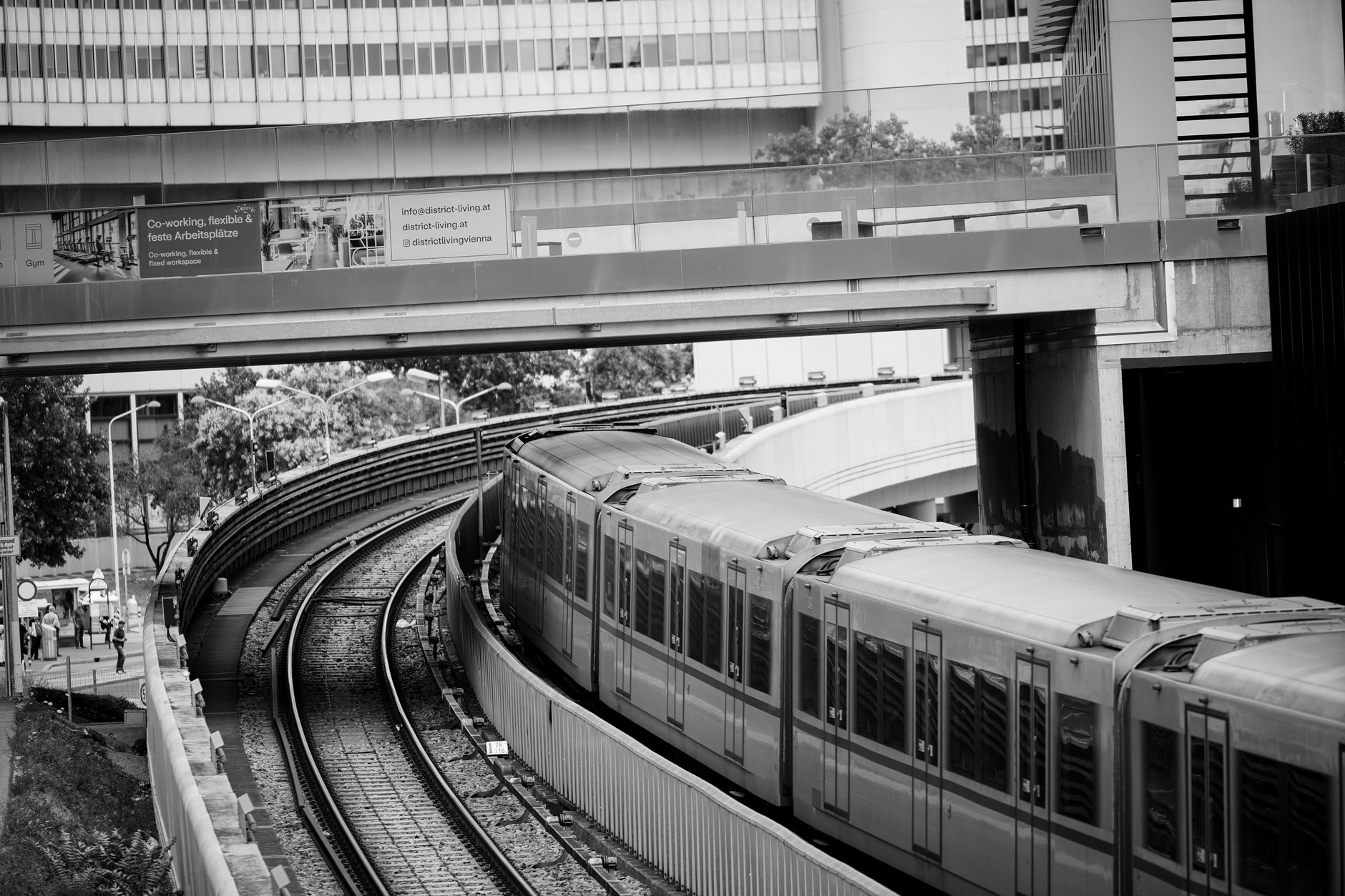
The zone’s edge follows Vienna’s municipal boundary, not a transport line. Beyond that boundary, the same physical train often keeps running — but the fare regime changes mid-journey. VOR’s own network map shows the core zone as a single block, with concentric zones radiating outward into Lower Austria and, eventually, Burgenland.
For a fuller breakdown of how that zone system is built and priced, see how Vienna’s public transport fare system actually works.
What happens if you cross the boundary with only a Vienna ticket?
You are no longer validly ticketed the moment the train, tram or bus leaves Kernzone 100. Inspectors check tickets on regional lines too. A Vienna-only fare does not cover a single stop beyond the city limit.
This is not a gray area. VOR’s fare rules treat the core zone and each adjoining zone as separate products that must be bought together in advance, not settled after the fact. Wiener Linien and ÖBB, the national rail operator, both run spot checks on routes that cross the line, including the S-Bahn lines that serve commuter towns.
There is no on-board top-up machine that reliably fixes this after boarding. The practical rule is simple: buy the zone before you need it.
Which popular destinations sit outside the core zone — and what do they actually need?
Several places that visitors and residents travel to constantly are not inside Kernzone 100, even though they feel like part of Vienna’s everyday orbit. Here is where each one sits relative to the boundary, and roughly what a reader needs beyond a Vienna ticket. Exact zone counts and current prices should always be confirmed on VOR’s own fare finder, since they are revised periodically.
| Destination | Distance from city center | Zone situation | What that means practically |
|---|---|---|---|
| Vienna Airport, Schwechat | About 18 km southeast | Outside Kernzone 100; requires the core zone plus the airport’s own add-on zone on S-Bahn/regional trains | A standard Vienna ticket does not cover the S7 or regional trains to the terminal; the premium CAT airport train runs on a separate fare entirely, confirmable via taxi from Vienna airport: real cost, and when it pays for comparison |
| Klosterneuburg | About 12 km north | One VOR zone beyond the core | Needs a core-zone-plus-one ticket before boarding; a city-only fare stops validity at the border |
| Perchtoldsdorf | About 10 km southwest | One VOR zone beyond the core | Same pattern as Klosterneuburg — one extra zone, bought in advance |
| Purkersdorf | About 14 km west | One VOR zone beyond the core | Served by regional trains out of Vienna’s western stations; needs the same single add-on zone |
| Mödling | About 14 km south | One VOR zone beyond the core | A common day-trip or commuter run; one extra zone covers it |
| Baden bei Wien | About 26 km south | Two or more VOR zones beyond the core, depending on route | Reached by regional rail or the Badner Bahn tram-train; farther out means more zones, not a flat add-on |
The pattern is consistent. Near suburbs cost one extra zone. Baden, being farther, costs more than one. The airport sits in its own category because of the dedicated airport-zone structure layered onto the regional fare. None of this is covered by a plain Vienna single ticket or a Vienna-only pass.
How should a reader actually buy the right ticket?
Decide the destination before buying anything. VOR’s online fare finder calculates the exact zone count and price for a specific start and end point, and that figure should be treated as current, not the examples above.
- Trips to Klosterneuburg, Perchtoldsdorf, Purkersdorf or Mödling: look for a “core zone plus one” or equivalent regional ticket, not a Vienna single.
- Trips to Baden: confirm the zone count on VOR’s site or at a ticket machine, since it spans more than one additional zone.
- Trips to the airport: decide between the regional S-Bahn (cheaper, needs the airport add-on zone) and the CAT (its own separate, higher fare), and buy accordingly before boarding.
Ticket machines at Vienna’s main stations and most U-Bahn stops sell these combined fares directly. So does the ÖBB app, which covers regional and national rail together.
Does a Vienna annual pass cover any of this?
No. The Wiener Linien annual pass (Jahreskarte) is built for Kernzone 100 and stops at exactly the same boundary as a single ticket. It is a strong value for anyone whose travel stays inside the city, a question covered in full in is the Wiener Linien annual pass worth it for residents?.
Residents who commute regularly to Klosterneuburg, Mödling or similar towns typically add a separate regional pass product, priced by VOR for the specific extra zones, rather than relying on the Vienna pass to stretch further than its own boundary.
Why does Vienna’s zone system work this way?
Vienna’s core zone exists because Wiener Linien is a city operator with a city-sized network. Everything beyond the municipal line belongs to Lower Austria or Burgenland, each with its own stations, local buses and regional rail services.
VOR was built to bind these separate networks into one fare logic, so a single ticket can span operators. That is efficient. But it also means the zone boundary is drawn at an administrative line, not at the edge of where Vienna “feels” like it ends. Perchtoldsdorf and Klosterneuburg are, in daily life, practically suburbs. On the fare map, they are not Vienna at all.
For how the city’s own districts are numbered and organized inside that boundary, see how Vienna’s district numbers work — and where the logic fails. For day trips that sit further out still, including routes to Bratislava and Budapest, see Vienna to Bratislava: how to get there, what to see and Vienna to Budapest: day trip or overnight by train?.
Broader guidance on getting around the city, including how fares and passes interact day to day, sits in the Getting Around archive and the practical planning hub.
The short version
Kernzone 100 covers Vienna’s 23 districts and nothing past the city line. Near suburbs like Klosterneuburg, Perchtoldsdorf, Purkersdorf and Mödling need one extra VOR zone. Baden needs more than one. The airport needs its own add-on zone or a separate CAT fare entirely. A Vienna-only ticket covers none of it, and the fix is to buy the correct zone before boarding, confirmed on VOR’s own fare tool rather than guessed at the platform.

Access Vienna is an independent guide written from published, checkable sources. We have not visited the places described here and we do not publish personal recommendations or invented ‘local favorites’ — where something is singled out as notable, we say who says so. Opening times, fares, closures and prices change at short notice, so treat everything here as a starting point and confirm with the museum, operator or venue directly before building a day around it. We give no advice on visas, insurance, health or safety; use your own government’s official guidance for those.
Featured image: Photo by Geolina163, source, BY-SA