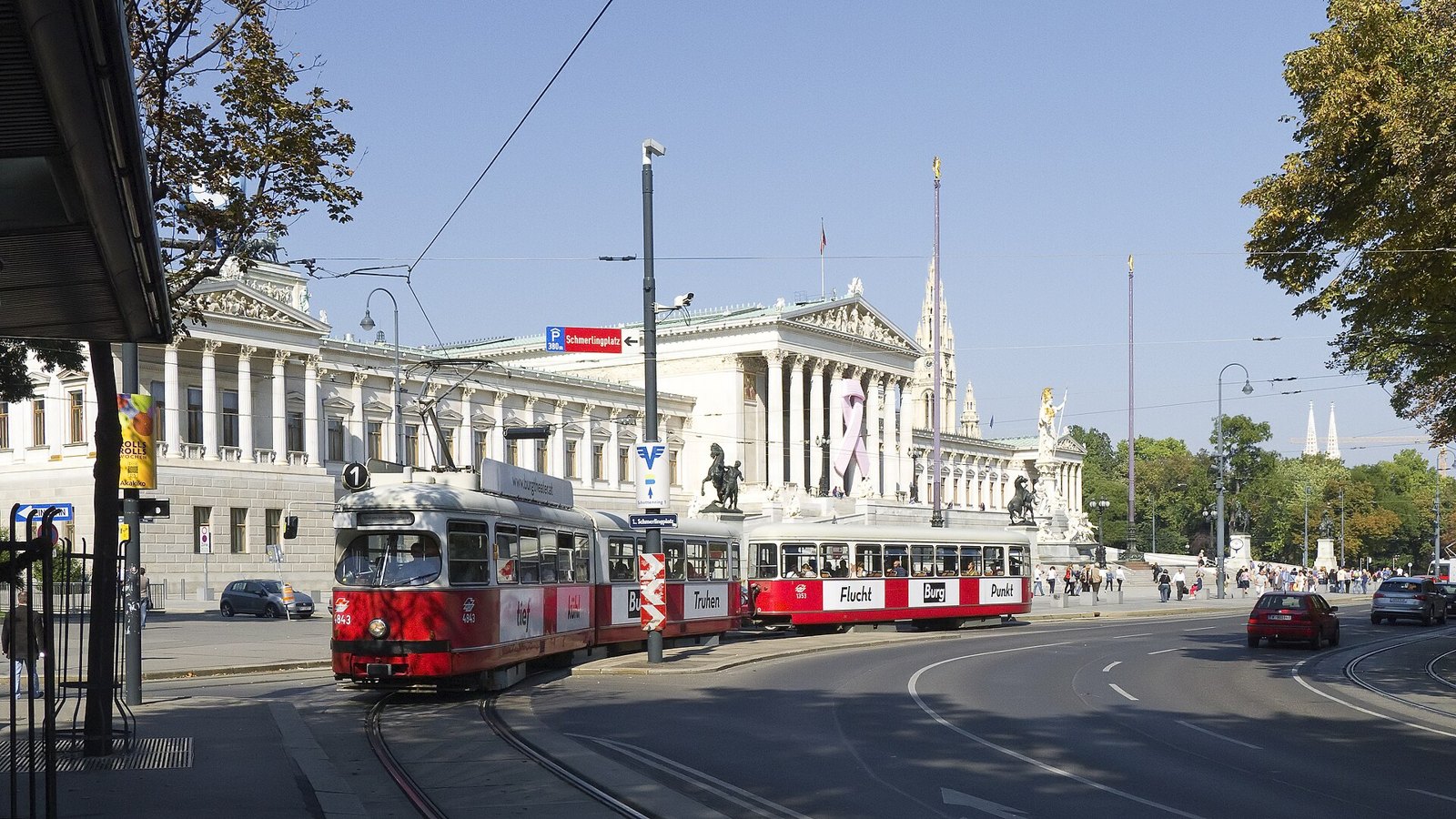

This is the section that stops a week in Vienna going wrong. Not what to see — what is open, what a ticket costs, what the city does with your rubbish, and which rules carry a fine if you get them wrong.
Transport: the numbers changed this year
Vienna spent thirteen years with the cheapest annual transit pass in western Europe, and the figure became part of the city’s identity: €365, a euro a day. That ended on 1 January 2026. The current fares are:
| Single ticket | €3.20 · €3.00 in the app |
| 24 hours | €10.20 |
| 7 days | €28.90 |
| 31 days | €75.00 |
| Annual pass (Jahreskarte) | €467 · €461 digital |
| Reduced annual pass | €300 · €294 digital |
| Travelling without a valid ticket | €135 |
The 48- and 72-hour tickets were withdrawn entirely, which catches out anyone following a guide written before this year. A great many of those guides — and a great many people repeating them — still say “a euro a day”.
The practical consequence is that the annual pass now breaks even at about 6.2 months of use rather than the roughly eight months the old fares implied. If you are in Vienna more than half the year, it is the cheapest option by a wide margin. The full calculation, including the employer Jobticket subsidy, is here.
How the zone system works matters more than the price for anyone travelling to the airport or out to the Wienerwald, because Vienna’s core zone ends before the city does.
The Sunday problem
Austria’s Öffnungszeitengesetz keeps shops shut on Sundays and public holidays. On weekdays they may open 06:00–21:00 and on Saturdays 06:00–18:00, with no more than 72 hours in a week — and most close far earlier than the law allows.
The exemptions are what actually matter on the day: shops in railway stations and at the airport — Hauptbahnhof, Westbahnhof, Praterstern — plus museum and theatre shops, may trade on a Sunday. That is where the city buys milk. The full rules, and the exceptions worth knowing.
Waste, water and the small civic rules
Vienna separates waste more finely than most visitors expect, and the bin colours are not intuitive. What goes in which bin is the single most useful thing to read before your first week in a Viennese building.
Tap water here comes by gravity from Alpine springs and is worth drinking; asking for it in a restaurant is a different social question, which we cover in Food & Markets.
Where to go next
- Getting Around — fares, zones, the airport, what a ticket must show
- Planning & Practicalities — hours, holidays and the rhythm of the year
- Food & Markets — market halls, the Beisl, and the coffee-house conventions
- Parks & Outdoors — the Prater, the Wienerwald and the Danube
Fares verified against the 1 January 2026 Wiener Linien tariff and checked on 2 September 2026. Opening-hours rules per the Federal Ministry (Business Hours Act 2003). Confirm current fares in the WienMobil shop before budgeting — Wiener Linien does not publish its fare table on its public information pages.