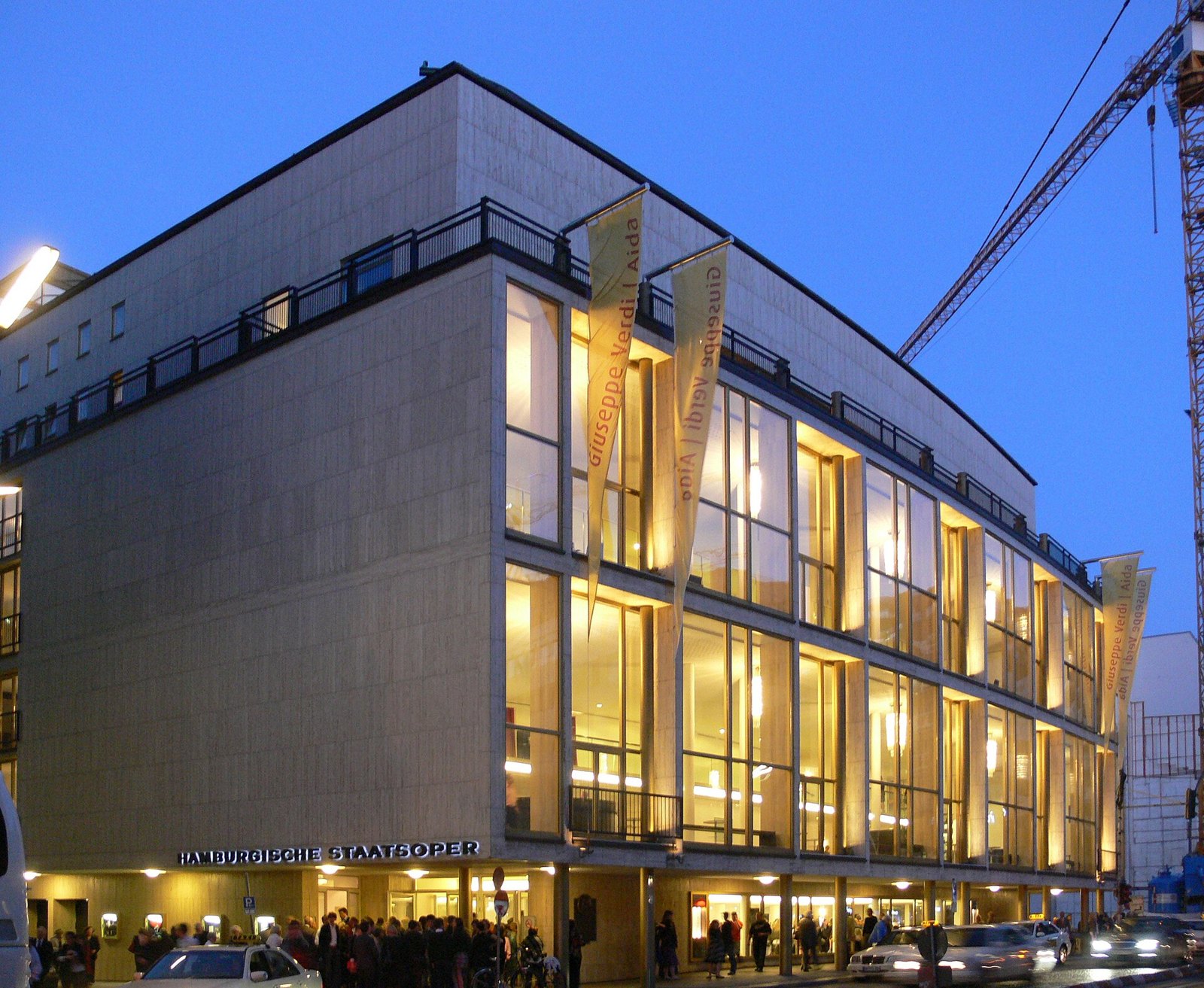
How early should you queue for Staatsoper standing tickets?
There is no single number. For an ordinary weeknight repertory opera, arriving 45 to 60 minutes before the standing-room window opens is usually enough. For a sold-out Sunday performance of a Verdi or Wagner core work, or a premiere, plan for three hours or more. The gap between those two situations is the whole story.
The Wiener Staatsoper (Vienna State Opera), the city’s main opera house on the Ringstrasse in the 1st district, Innere Stadt, sells standing-room places — Stehplätze — separately from seats. They go on sale shortly before curtain, at a dedicated window, and they cannot be reserved in advance. Demand for that window is what varies, not the window itself.
Why isn’t there one answer for every night?
Because standing-room demand tracks the production, not the building. A rarely staged opera on a Tuesday draws a thin queue. A famous title with a starry cast on a weekend draws a long one. The house is the same. The audience isn’t.
Three things move the queue length most: how well-known the opera or ballet is, whether it’s a weekday or weekend, and whether anyone unusual is on stage or in the pit. Stack two or three of those factors together and the arrival time you need can triple.
What’s the actual decision rule, by production and day?
The table below sets out a working rule of thumb. It is not an official Staatsoper policy — the house does not publish queue-time guidance — but a pattern drawn from how standing-room demand is known to behave for different categories of performance.
| Type of performance | Typical demand | Arrive at least this early |
|---|---|---|
| Weeknight repertory, lesser-known title | Low | 45 minutes |
| Weeknight repertory, popular title (e.g. a standard Mozart or Puccini) | Moderate | 60–90 minutes |
| Weekend repertory, popular title | High | 90 minutes–2 hours |
| Sold-out Verdi or Wagner, especially Sunday | Very high | 3 hours or more |
| Season premiere or new production | Peak | 3–4 hours; some queue from morning |
| Guest-conductor or star-singer debut night | Peak | Treat as a premiere: 2–3 hours |
| Vienna State Ballet gala, standard cast | Moderate | 60–90 minutes |
| Ballet gala with a headline principal dancer | High | 2 hours |
Read the table as a starting point, not a guarantee. A quiet-looking Tuesday can still sell out if a famous conductor steps in at short notice. Always check the Staatsoper’s own daily program before deciding.
What changes on a guest-conductor or gala night?
Guest conductors and star casts pull in a different audience: regular Viennese operagoers who track who is on the podium, not just what’s being staged. That audience queues early and knows the system.
A ballet gala works differently again. Galas often mix repertoire and draw a broader, more casual crowd — unless a specific principal dancer is billed, in which case demand can spike close to premiere levels. If a program lists a debut, a farewell performance, or a single high-profile guest name, treat it as a premiere for planning purposes, regardless of what’s actually on stage.
Season openers behave differently from single blockbuster performances. They combine the pull of a famous title with the extra prestige of being first in the run. That combination is what produces the very long queues — sometimes reported as forming hours before the box office even opens.
Where does the standing-room queue actually form?
Standing places are sold at a separate window inside the Staatsoper, and the sale typically opens a set number of minutes before curtain — the exact timing is set by the house and should be confirmed on the Wiener Staatsoper’s own website rather than assumed. The physical queue, however, forms well before that window opens, on busy nights, simply because people arrive early to be near the front.
Standing areas exist in more than one part of the house — behind the stalls (Parterre) and in the upper gallery (Galerie) — and each has its own queue and its own ticket allocation. The house’s standing capacity runs into the hundreds of places across these areas; for the current, confirmed figure, the Staatsoper’s own visitor information is the source to check, since seating and standing configurations can be adjusted between seasons.
Long-standing informal practice at the Staatsoper — reported over many years by visitors and by Viennese operagoers — involves tying a scarf to the rail to mark a place in the standing area once inside, then stepping back to the cloakroom or foyer before the performance starts. This is a custom, not a house rule, and should not be relied on as a guarantee.

Does the queue matter less for a weekday show?
Usually, yes. Tuesday and Wednesday performances of standard repertory works are the easiest night to get a standing place without a long wait. Demand is lower, and the audience skews toward locals with subscriptions rather than visitors chasing a specific date.
That eases considerably outside the main season. The Staatsoper closes for a summer break, generally through most of July and August — a pattern common to Vienna’s major houses and worth checking against the current schedule before planning a summer visit, since it directly affects whether there is a queue at all.
How much does a standing ticket actually cost?
Prices differ by standing area — Parterre standing is priced higher than the upper Galerie — and by production. Because ticket prices are adjusted between seasons, this article does not quote a figure; the Staatsoper’s own ticket page lists current prices for each standing category and should be treated as the only reliable source.
What is durable is the shape of the pricing: standing tickets are consistently far cheaper than the lowest seated price, which is the reason the queue exists at all. It’s also why the practice draws regular Viennese operagoers, not only visitors.


What should a resident know that a one-time visitor might not?
Frequent Staatsoper standing-room attendees tend to build a private sense of which nights run long and which don’t, based on the season program rather than any published rule. That’s essentially what the table above tries to compress into something usable on a first visit.
Residents also have an option visitors typically don’t use as easily: coming back another night. If a queue looks unmanageable for one performance, checking the following week’s schedule for a quieter repertory night is often simpler than waiting it out. For background on how Vienna’s opera and concert scene fits together more broadly, the Vienna Music hub covers standing tickets, the ballot systems some houses use, and how the Staatsoper compares with other venues.
How does this compare with other ways to hear opera in Vienna?
Standing tickets at the Staatsoper are not the only route into live opera and classical music in the city. Vienna also has a well-known market of tourist-oriented concerts, often in historic halls, pitched at a different audience and price point than the main houses.
The distinction between those tourist concerts and houses like the Staatsoper or the Musikverein — the city’s principal concert hall — is laid out in more detail in Vienna Concert Tickets: The Tourist Concerts vs the Real Houses. It’s worth reading before assuming any “opera experience” advertised near Stephansdom is equivalent to a Staatsoper standing ticket. The Music & Opera archive covers related questions on ticketing and programming.
Practical points for the night itself
- Bring cash or a card accepted at the window — standing tickets are typically limited to one per person and sold in person, not online.
- Standing areas have no seating and, in some sections, limited views — check which standing zone corresponds to which part of the stage before joining a particular queue.
- Cloakroom facilities exist inside the building; heavy luggage or oversized bags are not something to bring to the queue. For pre-opera logistics around bags between a hotel checkout and an evening performance, see where to store luggage in Vienna between checkout and train.
- The Staatsoper sits directly on the Ring tram line and above a U-Bahn station, making it easy to reach without a car; Vienna’s fare system is explained in how Vienna’s public transport fare system actually works.
For wider planning around a trip that includes an opera night — timing it against museum closures, Sunday retail patterns, and other Vienna scheduling quirks — the Vienna Practical hub and the Planning & Practicalities archive cover how the city’s calendar shapes a visit more broadly.
The short version
Forty-five minutes covers a quiet weeknight. Two to three hours covers a popular weekend show. Three hours or more covers a sold-out Wagner or Verdi night, a premiere, or anything with a headline guest name attached. Ballet galas sit in between, unless a star principal is billed. None of these figures are fixed by the house itself — they describe a pattern, not a rule — so the final check, always, is the Staatsoper’s own listing for the specific date in question.
Access Vienna is an independent guide written from published, checkable sources. We have not visited the places described here and we do not publish personal recommendations or invented ‘local favorites’ — where something is singled out as notable, we say who says so. Opening times, fares, closures and prices change at short notice, so treat everything here as a starting point and confirm with the museum, operator or venue directly before building a day around it. We give no advice on visas, insurance, health or safety; use your own government’s official guidance for those.
Featured image: Photo by Photo: Andreas Praefcke, source, CC BY-SA 3.0
