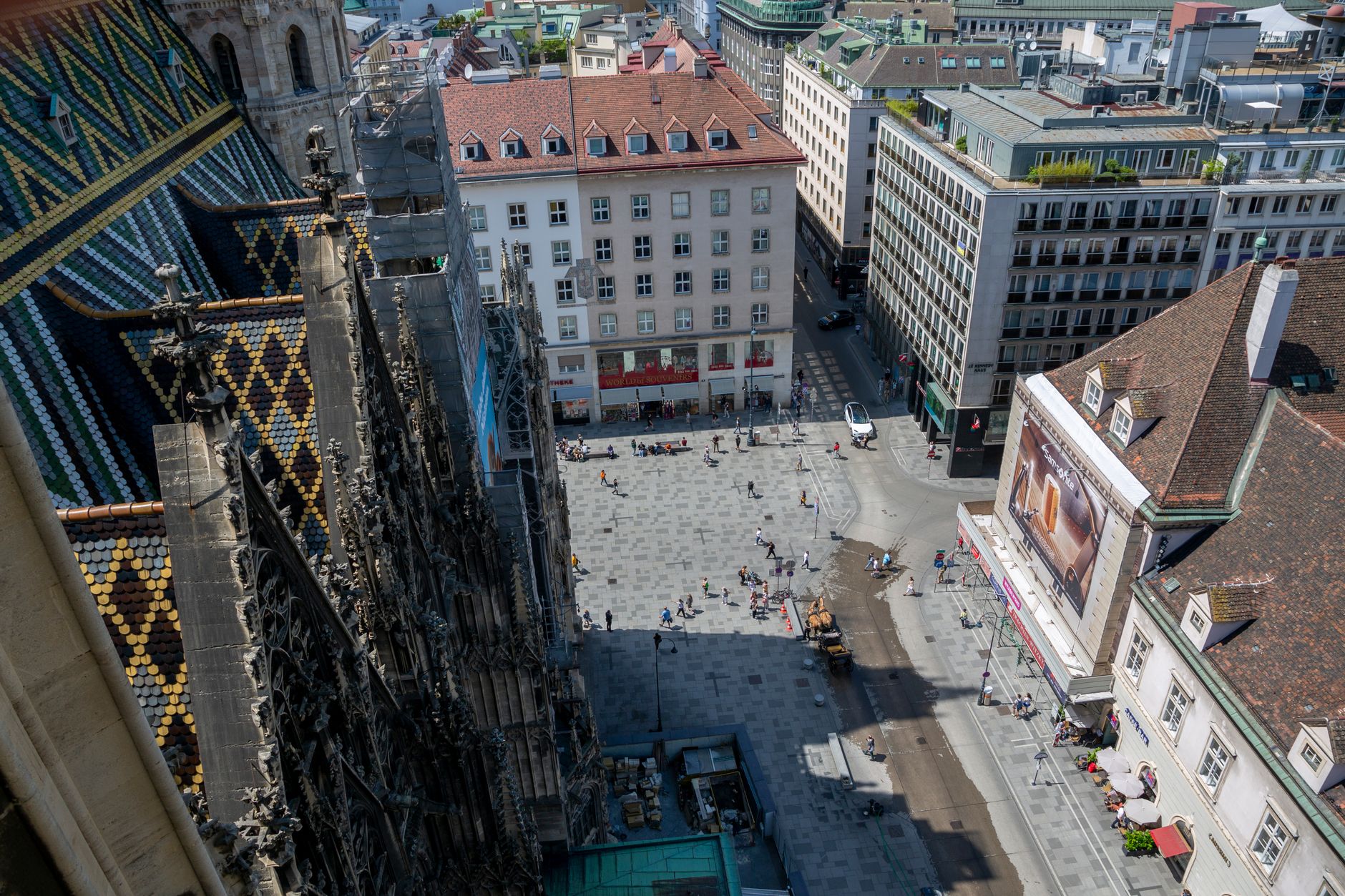
Why is so much of Vienna closed on a Sunday?
Most shops in Vienna close on Sunday because of the Öffnungszeitengesetz, the federal law that bans general retail trading on Sundays and public holidays. A cultural norm called Sonntagsruhe, or Sunday rest, reinforces it. The law does allow exemptions — train stations, petrol stations, markets, and a few tourism-zoned streets. That is why parts of the city keep functioning while most of it shuts.
What exactly stays open, and why?
The law splits Sunday trade into narrow, named categories. A shop that can show it serves travelers, medical need, or fuel is allowed to trade every day. The current wording sits in Austria’s Rechtsinformationssystem (RIS), the official legal database, which publishes the Öffnungszeitengesetz in full. Everything else in retail defaults to closed.
That single fact reorganizes how a Sunday in Vienna actually works. The table below maps a common need to the legal exemption behind it.
| What you need | Legal exemption that applies | Where it shows up |
|---|---|---|
| Quick groceries, snacks | Travel-point retail | Shops inside Wien Hauptbahnhof, Wien Mitte, and other major stations |
| Fuel, roadside basics | Petrol-station rule | Filling-station convenience stores, many open past midnight |
| Fresh produce, prepared food | Market trading rules | Naschmarkt, though most individual stalls close anyway; restaurants there keep trading |
| Prescription or urgent medicine | Apothekendienst rota | One rostered pharmacy per area, posted on every closed pharmacy’s door |
| Souvenirs, general shopping | Tourism-zone status | Part of Kärntner Straße and a small number of other streets |
| Cash | Not covered by the law at all | ATMs run every day, independent of shop-closing rules |
Anyone planning a day around this should treat the table as a decision rule, not trivia. Match the need to the row. Then go there.
Where can you buy food on a Sunday?
Train stations are the most reliable option. Wien Hauptbahnhof and Wien Mitte both carry supermarkets and bakeries trading under the travel-point exemption. They open daily, Sundays included, according to ÖBB, the national rail operator that manages retail space at both stations.
Petrol stations come second. Their attached shops can legally sell food, drinks, and toiletries on Sundays. Many stay open into the evening.
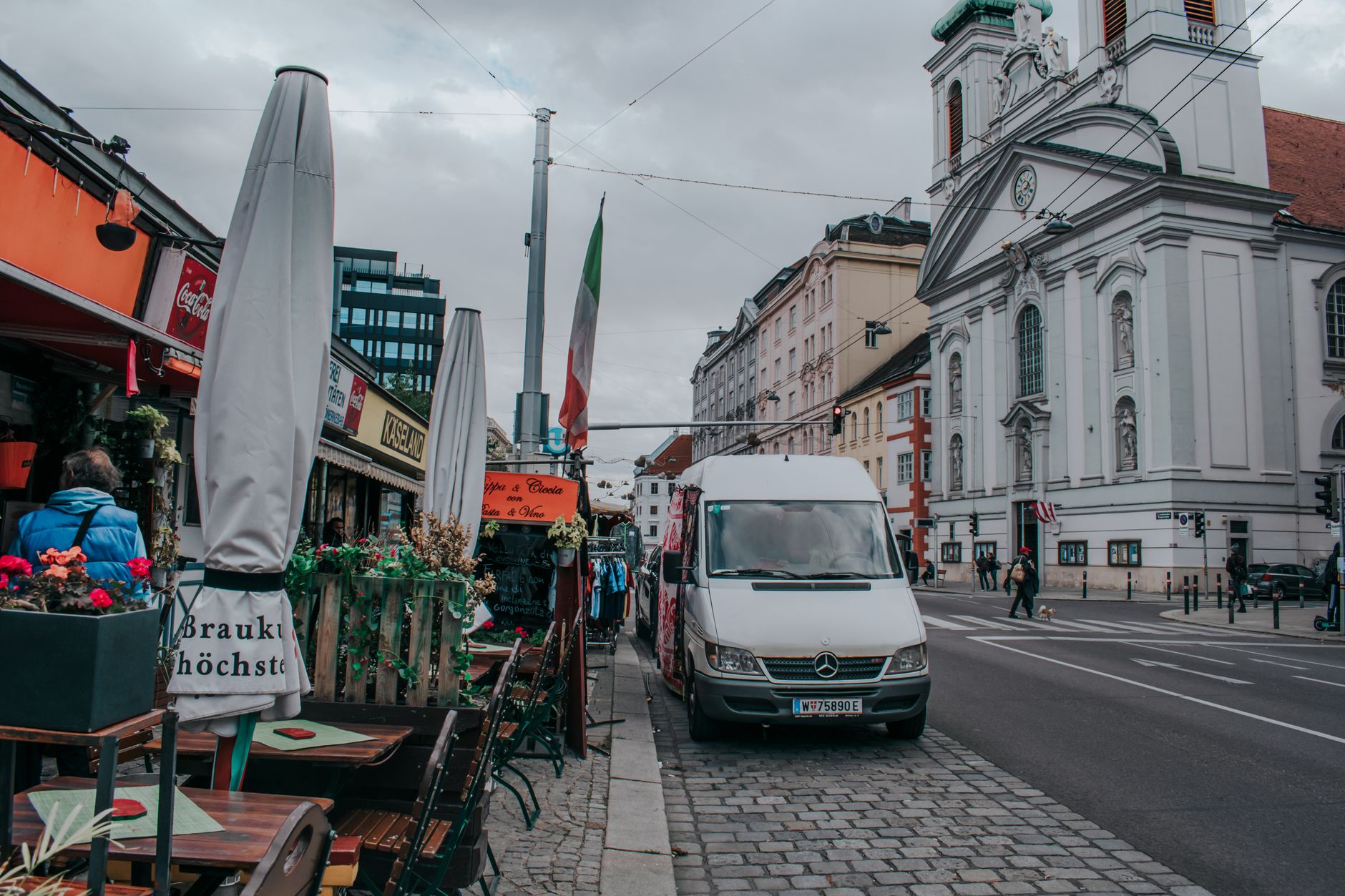
The Naschmarkt is the third option, with a caveat. It is Vienna’s largest permanent market, running along the border of the 4th district, Wieden, and the 6th, Mariahilf. Market rules do allow Sunday trading there. In practice, most stallholders close for the day. It is the restaurants lining the market, not the produce stands, that stay busy on a Sunday.
Where can you get medicine on a Sunday?
Pharmacies (Apotheken) run a rotating Sunday and public-holiday duty system called the Apothekendienst. One pharmacy per area stays open while its neighbors close. This rota changes weekly.
Every closed pharmacy must post a sign naming the nearest one on duty. The Österreichische Apothekerkammer, the Austrian Chamber of Pharmacists, runs a locator for the current schedule on its own site. Check it before assuming a specific pharmacy will be open.
Where can you get cash, a SIM card, or basic supplies?
Cash machines sit outside the closing law entirely. They run every day, at banks, stations, and shopping streets alike.
SIM cards and phone top-ups are harder to find away from stations. Kiosks inside Wien Hauptbahnhof and the terminal at Vienna International Airport typically trade under the same travel-point exemption. Tenants change, so confirm current retailers with the station operator directly rather than assuming a specific shop is still there.
Which streets are exempt as tourism zones?
Austria’s law lets regional authorities designate specific streets as tourism zones (Tourismuszonen), where shops may open on Sundays regardless of the general rule. In Vienna, part of Kärntner Straße — the pedestrian street running from Stephansplatz toward the Ringstrasse, in the 1st district, Innere Stadt — holds this status. A small number of other stretches share it, and district geography here is worth understanding on its own terms; Access Vienna’s explainer on how Vienna’s district numbers work covers how the central districts are laid out.
The designation is set by the city government, not chosen shop by shop. Coverage can be patchy — one side of a street exempt, the other not. The Wirtschaftskammer Österreich (WKO), Austria’s federal economic chamber, publishes guidance on which zones currently apply. It is the more reliable source than any single storefront sign.
What about museums and restaurants?
Museums are not shops. The Öffnungszeitengesetz does not touch them at all. Most major Vienna museums open on Sunday and close instead on Monday, a pattern covered in more depth in Access Vienna’s guide to Vienna’s museums and landmarks. Stephansdom, the cathedral at the city’s center, keeps its nave open daily. Only the climbable towers run separate paid hours, detailed in Access Vienna’s piece on what costs money at Stephansdom.
Restaurants, cafés, and Heurige (wine taverns on the city’s edges) sit under a different law, the Gewerbeordnung, which governs hospitality rather than retail. Many close on Sunday or Monday anyway. That is a business choice, not a legal one.
How does this affect people who actually live here?
For residents, Sunday closing is less a mystery than a habit. Groceries get bought Saturday, or they wait until Monday. Newcomers working through registration formalities, covered in Access Vienna’s explainer on the Meldezettel, often meet this rhythm early — a Sunday arrival, and a closed supermarket.
Transport keeps running to its normal weekend pattern regardless of the retail closures, as laid out in Access Vienna’s guide to how Vienna’s public transport fare system works. For a fuller picture of how the weekly calendar shapes daily life here, Access Vienna’s hub on living in Vienna and the broader practical planning hub go into more detail.
Access Vienna is an independent guide written from published, checkable sources. We have not visited the places described here and we do not publish personal recommendations or invented ‘local favorites’ — where something is singled out as notable, we say who says so. Opening times, fares, closures and prices change at short notice, so treat everything here as a starting point and confirm with the museum, operator or venue directly before building a day around it. We give no advice on visas, insurance, health or safety; use your own government’s official guidance for those.