For most residents, yes — but only past a specific usage threshold. The Wiener Linien annual pass, the Jahreskarte, tends to beat buying single or monthly tickets once someone uses public transport in Vienna for roughly six months of the year or more. Below that line, other options usually cost less.
That threshold is the useful number here. It is also the number most guides skip, in favor of simply repeating the headline annual price. What follows is the actual math, plus the cases — students, part-year residents, employer subsidies — where the flat annual figure does not apply to the person reading it.
What does the Wiener Linien Jahreskarte actually include?
The Jahreskarte (annual pass) covers unlimited travel on Vienna’s trams, buses, and U-Bahn subway lines within the city’s core fare zone for twelve months. It is issued on a personal, non-transferable photo card and is not shared between household members.
It does not extend automatically into Lower Austria or Burgenland. Trips that cross into neighboring fare zones need an add-on ticket, priced separately. Vienna’s fare system runs on zones rather than distance, a structure explained in more detail in how Vienna’s public transport fare system actually works.
Wiener Linien publishes the current annual price on its own site, and it should be confirmed there before budgeting — fares are adjusted periodically, usually each year. For thirteen years it sat at €365 — the figure the operator itself popularised as “a euro a day”. That era ended on 1 January 2026. The Jahreskarte now costs €467 on the classic card, or €461 bought digitally, and most other fares rose with it: a single ticket is €3.20 (€3.00 in the app), a 31-day ticket €75.00, a week €28.90, and 24 hours €10.20. The 48- and 72-hour tickets were withdrawn altogether. A great many guides, and a great many people repeating them, are still quoting “a euro a day”.
How many trips per month make the annual pass cheaper?
Divide the annual price by the monthly ticket price. At €467 against a 31-day ticket at €75.00, the pass breaks even at about 6.2 months of full-price monthly tickets. In practice, that rounds up to roughly six and a half months of Vienna-based living per year — a lower bar than the old €365 fare set, because the annual price rose by 28% while the monthly rose further.
Below about six months, paying month by month for exactly the months spent in the city is usually the cheaper choice. This matters for anyone with a defined absence: a semester abroad, a long posting elsewhere, a return to a home country over summer.
| Pattern of Vienna use | Likely cheaper option | Why |
|---|---|---|
| Lives in Vienna year-round, uses transit regularly | Jahreskarte | Full 12 months of use clears the ~6-month break-even |
| In Vienna 6–7 months a year | Buy Monatskarte for months present | Sits just under the break-even point |
| In Vienna 8+ months, irregular pattern | Jahreskarte | Cost is fixed regardless of how many trips are taken |
| Under 26, enrolled as a student | Semesterticket | Priced well below the Jahreskarte for eligible riders |
| Employer offers a Jobticket subsidy | Jahreskarte via employer | Net cost falls below any of the above |
These are approximate figures. Wiener Linien’s official pricing page is the source to confirm before deciding, since both the annual and monthly fares move over time.

Does the calculation change for anyone under 26?
Yes, substantially. Students and young people under 26 who qualify for the Semesterticket typically pay a fraction of the adult annual price, sold in two half-year installments through the regional transport authority VOR rather than Wiener Linien directly.
Two semesters of that reduced fare generally add up to well under the full Jahreskarte price. For an eligible student, buying the adult annual pass at full rate is close to the worst option on the table, not the best one. Eligibility rules and current pricing sit with VOR (Verkehrsverbund Ost-Region), and should be checked on its own site before assuming a discount applies.
The catch is eligibility itself. It typically requires enrollment at a recognized institution and an age cutoff, not simple residency. A working adult under 26 without student status does not qualify, and falls back to the standard adult comparison above.
Does an employer Jobticket subsidy change the math?
Often, yes, and by a large margin. Austria allows employers to subsidize an employee’s public transport pass, including the Wiener Linien Jahreskarte, without that benefit counting as taxable income, under the framework known as the Jobticket.
Where an employer covers the full cost, the pass is effectively free to the employee. Where it covers part of it, the break-even point against monthly tickets drops well below six months, because the resident is no longer paying the full €467 comparison figure. This is worth raising directly with an employer’s HR department rather than assumed. Terms vary by company, and some limit the subsidy to certain routes or fare zones.
Is the Klimaticket a better buy than the Wiener Linien pass?
Only for people who travel regularly outside Vienna. The Klimaticket is a national ticket, valid across almost all of Austria’s public transport network, not just the city. It costs considerably more than the Wiener Linien Jahreskarte, because it buys nationwide coverage rather than one city’s system.
For a resident who rarely leaves Vienna, the Klimaticket is overpaying for reach that goes unused. For someone commuting regularly to another province, or traveling by train across Austria often enough to justify it, the math flips. Current Klimaticket pricing and its regional variants are published on the ticket’s own official site, and change periodically enough to require checking there directly rather than trusting a fixed figure.
Who ends up losing money on the annual pass?
A short list, and it is worth being honest about it:
- Residents who spend several months a year outside Vienna, whether for work, family, or study elsewhere
- People who primarily cycle or walk and use transit only occasionally, for weather or distance
- Students and under-26s eligible for the Semesterticket who buy the adult pass out of habit
- Anyone whose employer would subsidize the pass but who buys it personally without asking first
None of these are edge cases. Together they cover a meaningful share of Vienna’s actual resident population, which is exactly why the flat “€1 a day” framing undersells its own limits.
How does a resident actually buy the Jahreskarte?
The annual pass is a personal, photo-ID card, not a reloadable anonymous ticket. New residents typically need proof of address to register for one, which for most people means the registration document issued after moving — the Meldezettel.
What that document is, and where it can stall a new arrival’s paperwork, is covered separately in the Meldezettel in Vienna: what it is, what blocks it. Purchase itself can be done through Wiener Linien’s customer centers or its own online portal; both routes require the same identity documents.
Broader context on how the fare system fits together — zones, ticket types, and where the annual pass sits among them — is laid out in how Vienna’s public transport fare system actually works, and in the wider practical planning hub covering getting around the city day to day.
The short version for a resident deciding today
Count the months. If Vienna is home for eight or more months of the year, and no student discount or employer subsidy applies, the Jahreskarte is very likely the cheapest way to move through the city.
If the pattern is shorter, seasonal, subsidized, or student-eligible, the flat annual price is the wrong number to compare against. Wiener Linien’s own site carries the current figures needed to run this math precisely; the shape of the decision, not the specific euro amount, is what holds steady year to year.
For a wider look at how residency actually functions here — beyond just the transit card — the living in Vienna hub and the getting around archive cover the adjacent paperwork and daily-life questions that tend to arrive at the same time as this one.
Access Vienna is an independent guide written from published, checkable sources. We have not visited the places described here and we do not publish personal recommendations or invented ‘local favorites’ — where something is singled out as notable, we say who says so. Opening times, fares, closures and prices change at short notice, so treat everything here as a starting point and confirm with the museum, operator or venue directly before building a day around it. We give no advice on visas, insurance, health or safety; use your own government’s official guidance for those.
Any prices mentioned are indicative only. Tool prices move constantly and vary by market, by retailer, and by whether a kit includes batteries or a charger — check the current price yourself before deciding.
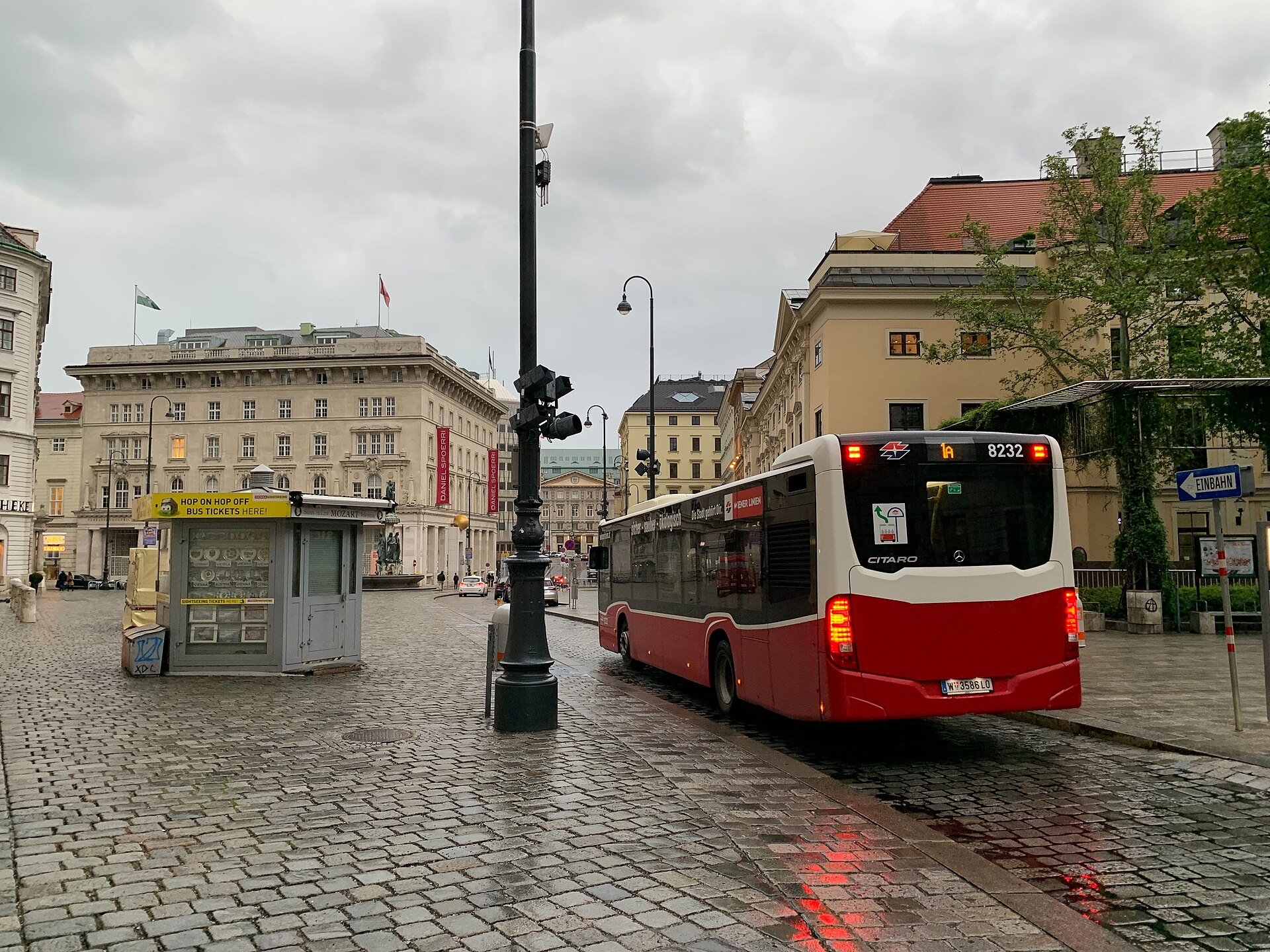
Featured image: Photo by Robot8A, source, CC BY-SA 4.0

Fares verified against the 1 January 2026 Wiener Linien tariff and checked on 2 September 2026. Wiener Linien does not publish its fare table on its public information pages, so confirm the current price in the WienMobil ticket shop before budgeting.