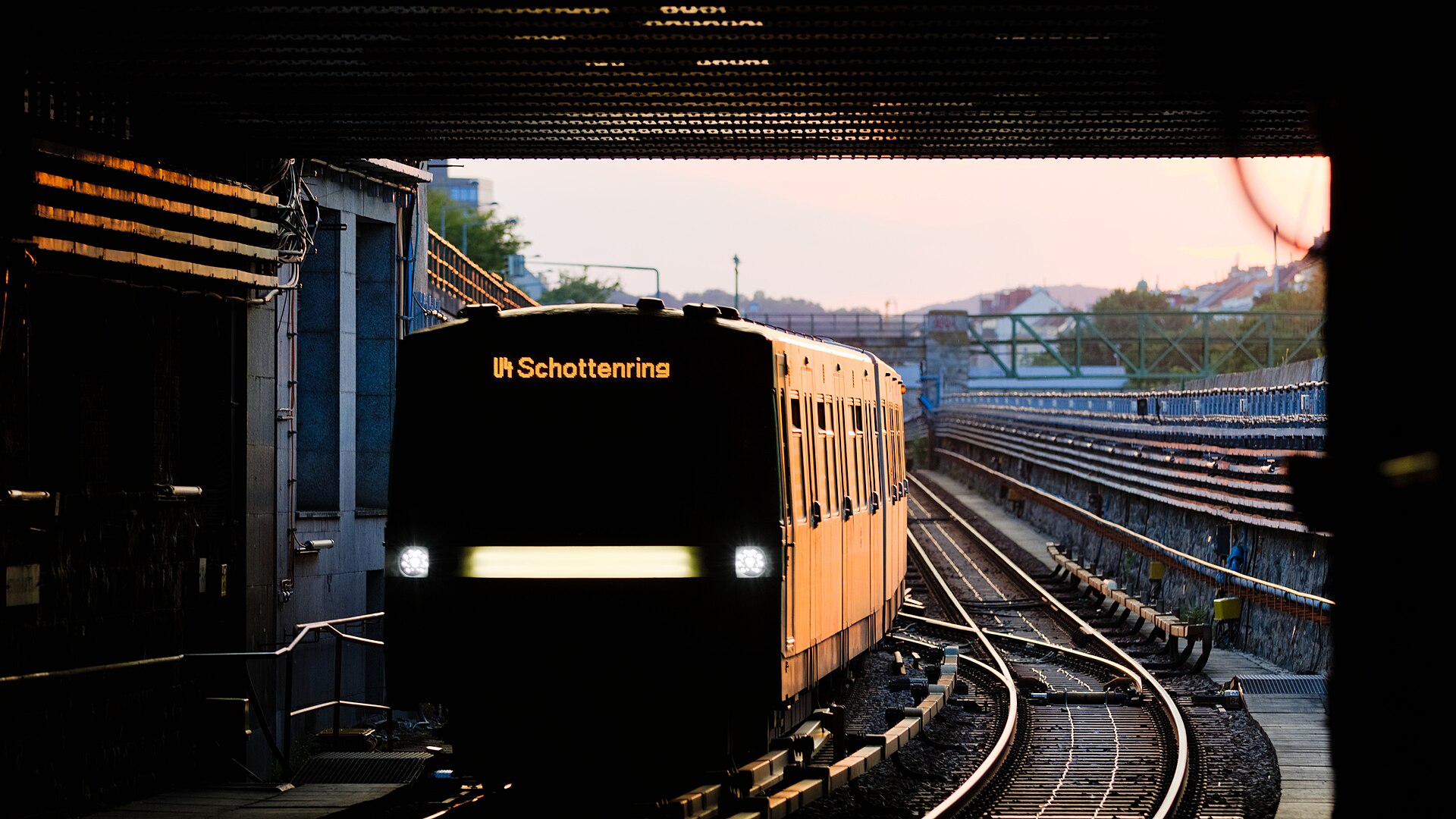
How does Vienna’s public transport fare system work?
Vienna runs a zone-based fare system operated by Wiener Linien, integrated with regional rail and bus operators through the Verkehrsverbund Ost-Region (VOR), the fare authority covering Vienna, Lower Austria and Burgenland. One ticket type covers the whole city center. Travel beyond it requires an extra zone. Fines apply for an invalid or unactivated ticket, not just a missing one.
What are the fare zones, and which one covers the city itself?
Vienna itself sits inside a single fare zone, known as Zone 100 or the Kernzone Wien (core zone). It covers all 23 Bezirke — administrative districts, numbered as well as named, from the 1st district, Innere Stadt, out to the 23rd, Liesing.
A standard ticket bought for Zone 100 is valid on every U-Bahn line, tram, bus and S-Bahn service inside that boundary. It does not matter which district you start or end in.
Step outside the city, and the fare structure changes. Lower Austria and Burgenland are divided into further zones, numbered in the 200 and 600 series by VOR. A trip from central Vienna to a town just past the city line — Klosterneuburg, say, or Schwechat — needs an additional zone on top of Zone 100. This is where a lot of avoidable fines happen, and it is covered in detail below.
Full zone maps are published by VOR, whose terms of carriage govern any journey that crosses a zone boundary.
What ticket types actually exist?
Wiener Linien sells a small, stable set of ticket types. Which one makes sense depends entirely on how long the visit or stay is.
- Einzelfahrschein — a single-journey ticket, valid for one continuous trip with transfers, not for a return.
- 24-, 48- and 72-hour tickets — unlimited travel within Zone 100 from the moment of validation.
- Wochenkarte — a calendar-week pass, running Monday to Sunday regardless of the day it’s bought.
- Monatskarte — a rolling calendar-month pass.
- Jahreskarte — an annual pass, personalized to the holder’s name, often described in the Vienna press as costing close to a euro a day, though the exact price is set by Wiener Linien and should be checked on its site, not assumed from an old news article.
Current prices, and the exact rules for each ticket, sit on Wiener Linien’s own site. Fares are perishable information. This article will not quote a number that could be wrong by the time it is read.


How does validation actually work?
Paper tickets are not valid on purchase. They become valid only after being stamped at one of the small blue validation machines mounted at U-Bahn entrances, on trams and inside buses.
Once stamped, a single-journey or time-limited ticket starts its clock immediately. There is no grace period for stamping it later, and inspectors treat an unstamped paper ticket as no ticket at all.
Digital tickets bought through the Wiener Linien app work differently in one important respect: they must be fully activated and visible on the device before boarding, not merely purchased. That distinction drives most of the disputes covered next.
,_Austria_%F0%9F%87%A6%F0%9F%87%B9_-_U-Bahn-Station_Ro%C3%9Fauer_L%C3%A4nde.jpg)
What actually happens in the edge cases fare inspectors flag?
Most fare-system articles stop at “buy a ticket and validate it.” That’s not where riders actually get caught out. The disputes cluster around a handful of specific situations, and each has a documented, non-negotiable answer.
| Situation | What actually happens | Why |
|---|---|---|
| Ticket bought on the app, but it hadn’t finished loading when checked | Treated as no valid ticket. The rider is expected to hold a ready, displayable ticket before boarding, not to be mid-purchase when an inspector arrives. | Wiener Linien’s app guidance states tickets must be confirmed and visible; a pending purchase is not proof of payment at the moment of the check. |
| Traveling from Zone 100 into Niederösterreich (Lower Austria) without the extra zone | Fined for the missing zone, even if the Zone 100 portion of the trip was fully valid. The Vienna ticket simply stops covering the journey at the city boundary. | VOR’s tariff structure charges by zone crossed, not by city limits alone; the operator’s zone maps show exactly where Zone 100 ends. |
| Jahreskarte registered to an old address | The card itself usually still scans as valid, since it’s tied to the holder’s name, not an address. But discounted versions linked to a Vorteilscard — for students, seniors, or Vienna residents — depend on a current Hauptwohnsitz (main residence) registration. An outdated address can void the discount and trigger a fine for using an unqualified concession. | Wiener Linien administers the discount; the city’s registration office (Meldeamt) is the source record it checks against. |
| Vorteilscard-linked ticket bought online, start date never set | Not valid. Many advance-purchase digital tickets require the buyer to nominate a start date and time before travel. An unset start date means the ticket has not begun, whatever the purchase confirmation shows. | This is a design feature of pre-sale digital ticketing generally, confirmed in Wiener Linien’s own purchase flow, not a Vienna-specific quirk. |
The common thread: possession of a receipt is not the same as possession of a valid ticket. Inspectors check validity at the moment of the check, not intent.
How does the Jahreskarte work for people who actually live here?
For a resident, the annual pass changes the math of daily life more than any single-fare rule does. It converts every trip into a sunk cost, already paid.
That matters for how a district functions day to day — a subject covered more broadly in the Access Vienna guide to living in the city. A flat annual pass makes short hops — one stop, a change of tram, a detour to a market — essentially free at the margin, which shapes how residents actually move rather than how a tourist timetable suggests they should.
It also means renewal details matter more than they first appear. A pass tied to residency status, once granted at a discount, can be reassessed if the underlying registration lapses. Anyone renewing a Vorteilscard after moving within Vienna should update the registered address first, not after.
The same logic — a system that looks simple until a resident actually has to interact with its administrative back end — runs through other parts of city life. The Access Vienna explainer on waste separation covers a comparable case: a rule that reads simply, but has real bureaucratic teeth once you’re the one filing the paperwork.
What about tourists on a short trip?
A visitor staying a few days is usually better served by the 24-, 48- or 72-hour tickets than by piecing together single fares. All three cover Zone 100 only.
Anyone planning a day trip outside the city — to Klosterneuburg, to the Wienerwald, to Niederösterreich generally — should buy the zone extension before boarding, not on arrival. Buying it after the fact is exactly the scenario the fine structure is built around.
The material covered under the Living in Vienna archive extends past fares into the practical mechanics visitors rarely think about until they need them: registration, waste rules, how a Bezirk actually organizes itself administratively.
Where to check current fares and buy tickets
Prices change. Zone maps get redrawn occasionally. None of that should be taken from a blog, including this one, as gospel for a specific trip.
The two sources that matter are Wiener Linien, for anything inside the city, and VOR, for anything that crosses into Niederösterreich or Burgenland. Both publish current fares, zone maps and terms of carriage directly.
Confirm the number before traveling. That single habit avoids nearly every dispute described in the table above.
Access Vienna is an independent guide written from published, checkable sources. We have not visited the places described here and we do not publish personal recommendations or invented ‘local favorites’ — where something is singled out as notable, we say who says so. Opening times, fares, closures and prices change at short notice, so treat everything here as a starting point and confirm with the museum, operator or venue directly before building a day around it. We give no advice on visas, insurance, health or safety; use your own government’s official guidance for those.
Featured image: Photo by D-Kuru, source, CC BY-SA 4.0
